Squash is played in a 9.75m x 6.4m four-walled court, making it one of the most physically demanding sports. The PSA organizes the professional tour, with games played to 11 points using point-a-rally scoring. Understanding court dimensions, let/stroke rules, and ball types is crucial for PE exam preparation.
Test your Squash knowledge. Take a timed test or practice individual questions below.
Take a Test
Select the number of questions and begin your timed assessment
Choose Question Count
or enter custom count
60s per question
Passing: 50%
Question 1 of 10
00:00
Test Complete!
0/0Score
0%Percentage
—Status
00:00Time Taken
6Total Questions
0Answered
0Correct
0%Score
1How many points are needed to win a squash game?
A. 9 points
B. 11 points
C. 15 points
D. 21 points
2How many games are in a standard squash match?
A. 3 games
B. 5 games
C. 7 games
D. 4 games
3How many times can the ball bounce before being hit?
A. Zero times
B. Once
C. Twice
D. Three times
4What is the length of a squash court?
A. 8 meters
B. 9.75 meters
C. 10 meters
D. 12 meters
5How many walls are used in squash?
A. 2 walls
B. 3 walls
C. 4 walls
D. 6 walls
6What is a let in squash?
A. A point won
B. A replay of the rally
C. A type of serve
D. A type of shot
Quiz Complete!
You answered 0 out of 0 questions correctly.
Rules & Regulations
Master the complete rules of Squash.
Dimensions
Court, pitch, and equipment measurements.
Practice MCQs
Test your knowledge with interactive quizzes.
10 FAQs
Most frequently asked questions answered.
Detailed Overview
Squash is a racket and ball sport played by two or four players in a four-walled court. Players alternate striking the ball onto the playable surfaces of the four walls. It is one of the most physically demanding sports, requiring agility, endurance, and quick reflexes.
Key Topics for MCQ Preparation
Focus on these important topics when preparing for Squash MCQs in physical education exams:
Team Composition
Number of players, positions, and substitutions
Match Duration
Quarters, halves, periods, and time limits
Field Dimensions
Court, pitch, and equipment measurements
Fouls & Penalties
Violations, cards, and penalty systems
Governing Bodies
International and national organizations
Major Tournaments
World cups, championships, and premier events
Rules & Scoring
How points are scored and matches are won
Techniques & Skills
Key techniques, strokes, and playing styles
Rules & Regulations
A match is best of 5 games.
Each game is played to 11 points (point-a-rally scoring).
A player must win by 2 points.
The server must have at least one foot in the service box during the serve.
The serve must hit the front wall above the service line and land in the opposite quarter.
After the serve, players can hit the ball to any wall.
The ball may bounce once on the floor before being hit.
Interference (let/stroke) is awarded when a player is blocked from playing the ball.
Pitch / Court Dimensions
Court length: 9.75 meters (32 feet)
Court width: 6.4 meters (21 feet)
Front wall height: 4.57 meters (15 feet)
Back wall height: 2.13 meters (7 feet)
Service line height: 1.78 meters (5 feet 10 inches)
Tin (out-of-bounds) height: 0.43 meters (17 inches)
Ball diameter: 39.5-40 mm (pro level)
Racket maximum length: 68.6 cm (27 inches)
Quick Facts at a Glance
SportSquash
Players per TeamA match is best of 5 games.
Match FormatEach game is played to 11 points (point-a-rally scoring).
Key DimensionCourt length: 9.75 meters (32 feet)
Frequently Asked Questions
Find answers to the most common questions about Squash.
What is the difference between a let and a stroke in squash?
A let is a replay of the rally when interference occurs but the player could have made a good return. A stroke is awarded when the interference prevents a winning shot, giving the point directly to the obstructed player.
What is the tin in squash?
The tin is a metal strip at the bottom of the front wall. If the ball hits the tin, it is considered out, and the rally is lost. The tin is 0.43 meters (17 inches) high.
What is point-a-rally (PAR) scoring in squash?
PAR scoring means a point is scored on every rally, regardless of who served. The modern game uses PAR to 11 points, best of 5 games. The older English scoring only awarded points to the server.
What are the different squash ball types?
Squash balls come in different speeds: Pro (double yellow dot, slowest), Competition (single yellow dot), Club (red dot, faster), and Beginner (blue dot, fastest). Slower balls require more skill to generate rallies.
What is the T-position in squash?
The T is the intersection of the lines on the court floor, near the center. Controlling the T is crucial because it provides the best position to reach all corners of the court quickly.
What is a boast in squash?
A boast is a shot that hits a side wall before reaching the front wall. It is used to change the direction of the ball and can be defensive or attacking depending on the angle and power.
What is the difference between hardball and softball squash?
Softball squash uses a slower, bouncier ball on a standard 21-foot-wide court. Hardball squash uses a faster, harder ball on a narrower 18.5-foot court. Softball is the international standard.
How does the serve work in squash?
The server must stand in the service box with at least one foot inside. The ball must hit the front wall above the service line and land in the opposite back quarter. The server continues serving until they lose a rally.
What is a drop shot in squash?
A drop shot is a soft shot that hits the front wall just above the tin and lands close to the front wall, making it difficult for the opponent to reach. It is used to finish a rally when the opponent is deep in the court.
What are the major squash tournaments?
Major tournaments include the World Squash Championships, British Open, Tournament of Champions, US Open, and PSA World Tour events. The Professional Squash Association (PSA) organizes the world tour.


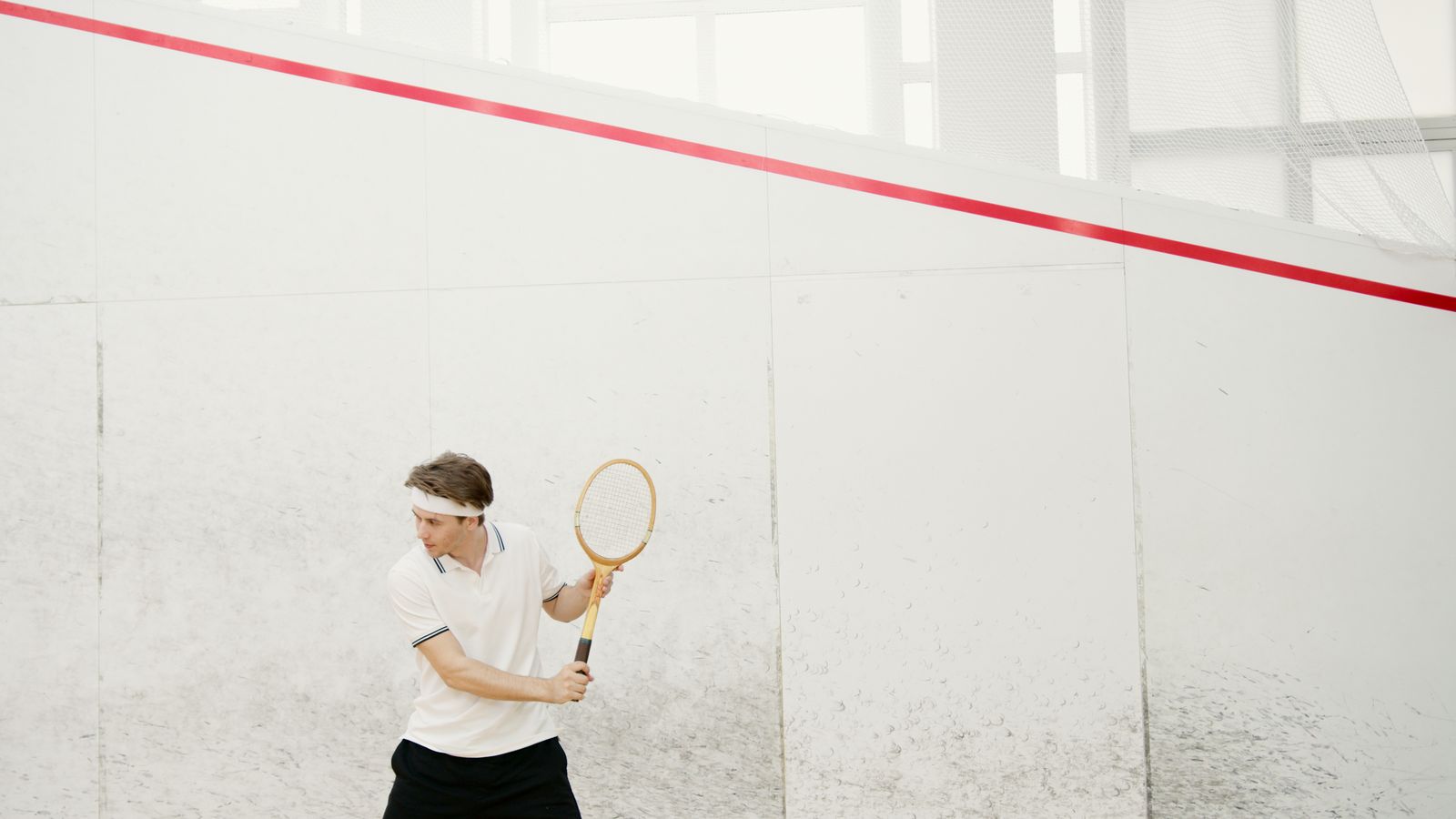
 The Wall Game